Computer vision enables machines to interpret and understand visual information
Computer vision is a field of artificial intelligence that
designs and trains deep learning and machine learning
algorithms to enable machines to interpret, analyze,
and understand visual information from images and
videos for tasks such as image recognition, object
detection, pattern recognition, and real-time visual analytics.
Innverse helps private and public computer vision leaders make
better, more affordable, and more accessible for millions of people around the world.
Unlock the value of your data with computer vision software
Machine learning projects often involve uncertainty, technical complexity, and significant execution risks. Without the right in-house AI expertise, it can be challenging to successfully plan, develop, and scale a custom AI solution that delivers real business value.
We have delivered more than 100 custom AI solutions across 20 countries worldwide and developed the national AI strategy for the Government of Estonia. With proven experience in AI development services and enterprise AI implementation, our team has the expertise to confidently support and execute your AI project end-to-end.
Derive value with computer vision
At Innverse, we develop advanced AI-powered computer vision solutions that extract actionable insights from images and videos with a level of speed, accuracy, and scalability far beyond human capability. Leveraging deep learning, machine learning, image recognition, object detection, and visual analytics, we transform raw visual data into meaningful intelligence.
Our expertise enables us to design and deploy custom computer vision systems tailored to each partner’s unique datasets, operational scale, and performance requirements—ensuring high accuracy, real-time processing, and seamless integration into existing workflows.
We provide computer vision solution
Data labeling
Data Labelling involves adding tags or annotations for machine learning.
Data architecture
Data architecture designs the structure and flow of information systems.
AI strategy
AI strategy outlines plans for implementing artificial intelligence initiatives effectively.
Piloting
Piloting involves testing small-scale implementations to assess feasibility and effectiveness.
Scaling
Scaling refers to expanding and optimising systems or operations for growth.
NLOps
Natural Language Processing, involves analysing and understanding language data.
Data collection
Data collection entails gathering information for analysis, often from diverse sources.
App development
App development involves creating software applications for various platforms and devices.
It means that we are with you from the start to the finish of the final
solution
From validating ideas on the business side to creating a strategy that is based on them. Making sure
everything is ready from the data side from quality, quantity, engineering and scalability.
We set up all the necessary MLOps infrastructure for initial pilots and scale successful pilots.
Of course, we develop the actual AI models producing the desired output and the supporting
applications to exploit the output of those models.
AI for business: Reinvent what's possible
AI is rapidly accelerating into a global mega-trend, transforming industries, reshaping businesses, and redefining how we live and work. Organizations that invest in a strong data and AI foundation are positioned to lead this new era of digital innovation, enabling them to reinvent processes, enhance decision-making, and achieve unprecedented levels of performance, efficiency, and scalability.
At Accenture, companies are guided from AI interest to actionable strategies that deliver measurable business value. Through responsible AI adoption and clear business-use cases, organizations receive end-to-end support—preparing their data, teams, and workflows for AI-driven transformation. With a secure, cloud-first digital core, businesses can unlock continuous reinvention, improved resilience, and sustainable growth powered by advanced analytics, automation, and enterprise AI solutions.
Artificial Intelligence
A new era of generative AI for everyone
In today’s fast-evolving digital landscape, generative AI is reshaping how businesses innovate, operate, and grow. At INNVERSE, we believe we are entering a new era where generative AI is no longer limited to tech giants or research labs—it is becoming an accessible, practical, and transformative resource for everyone.
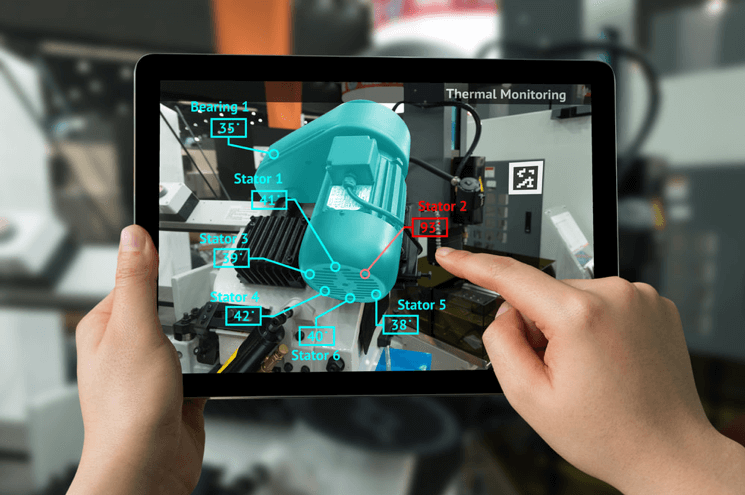
Image recognition is tasked with detecting and identifying people, items, places, writing or otherwise specific features on an image. Vision data like pictures from different manufacturing steps in a production line, for instance, could be used to make real-time decisions based on real-time detections of any quality or process deviation in real-time.
Historical data could also be batch processed to gain insight on the current production procedure to seek continuous improvement.
AI-based natural language processing (NLP) solutions allow machines to perform
We can provide vision systems that can be leveraged across multiple fields by leveraging different tools: in addition to the classification models described above, we can use Image Segmentation methods that are used to divide (segment) each image in multiple areas so that each pixel belongs to a known label.
Object Detection
Object detection adds localization to the former family of models by providing exact information regarding the position of multiple objects within the images. The application field for these models is extremely varied and includes, for example:
_ Detection of production issues or defects in manufacturing
_ Automation of visual inspections of equipment or buildings
_ Warehousing automation and inventory assessments
_ Characterising different production stages in the pharmaceutical industry
_ Crowd counting in public spaces as well as tools to guarantee that a minimum distance is respected when required
_ Workplace safety/PPE monitoring tools
Optical character recognition models convert images of typed, handwritten or printed text into machine-encoded text and are used for translation services, licence plate recognition and road-side signage information extraction.
Face Recognition
Our services also include ad-hoc AI systems like Face Recognition models that match known pictures of individuals to new images even when partial occlusion or angle variations are present.
Using distinctive facial features like the distance between the eyes or the shape of the cheekbones, the algorithms produce a condensed representation of the detected face for easy comparison against a database.
Such capability can be used for:
_ access control to restricted areas
_ assist law enforcement in identifying criminals and missing persons, even among crowds
_identity validation in a purchase process
Video Analytics
Video analytics involves the analysis of video content to extract valuable insights and information. It encompasses tasks such as object detection, activity recognition, and anomaly detection, using techniques like machine learning and computer vision algorithms to interpret visual data and enhance decision-making processes in various domains.
Video analytics leverages advanced algorithms to extract meaningful insights from video data, enabling applications such as surveillance, crowd monitoring, and behavioural analysis in diverse industries like security and retail.
Video Recognition
Video inputs can provide supplementary information in subsequent images such as a new angle/view of an object or the evolution of a person’s motion. We can translate this extra data into a deeper knowledge and insight through video processing algorithms that are at the core of functionalities like:
_ Human Activity Recognition tools can be used to assess what activities a person is carrying out and are used in security systems, sport and health surveillance, medical and disability assistance, gaming and human-computer interaction, retail theft prevention.
_ Visual speech recognition
_ Facial and micro expressions recognition
Object Tracking
Going further from video classification, Object tracking models leverage the change in object localization of the detected labels over different video frames enabling technologies like
_ Autonomous driving, which at its core consists of an “awareness” of the vehicle position compared to others and the road.
_ Gaze estimation to quantitatively measure human engagement and intention
Object tracking involves the continuous monitoring and tracing of objects in video streams over time. It enables applications such as surveillance, traffic monitoring, and sports analysis, facilitating the detection, classification, and trajectory prediction of moving objects in dynamic environments.
Our projects
Image Recognition use cases
A conversational interface with its own voice, Annika takes calls from
clients, listens to what they have to say, and directs them to the best course of action.
This is done using multilingual speech recognition to translate speech to words, transformer based
NLP models to understand the content of a customer’s sentence and non-autoregressive Transformer
based text to speech models that provide Annika with her signature voice.
Building a job search and career development platform requires quite a bit of
data collection - user profiles, job descriptions, cover letters, etc. We designed a system that
takes user provided documents - CV-s, cover letters, job and education descriptions, etc. - as input
and, using transformer based language models, extracts the relevant information that fits the data
model of the platform.
The machine learning system learns from expert auditors to accurately detect potential tax fraud and compliance risks. This advanced AI-powered solution is deployed at the Estonian Tax and Customs Board, enhancing auditing efficiency and supporting smarter, data-driven decision-making.
Our system helps power line utilities inspect their power grids using drones to capture data and a specialized AI-powered inspection platform, uBird, to analyze it efficiently and detect potential issues.
The Innverse team brings extensive experience in machine learning development, AI implementation, and custom AI solutions, enabling us to hit the ground running on your project. With a team of highly qualified specialists, we don’t waste time figuring out how to work efficiently — we already know the best practices, tools, and workflows to deliver results quickly and effectively.
We carefully allocate the right experts to your project based on their specific skill sets, whether it’s for one day or six months, ensuring that your AI initiative progresses smoothly and efficiently. By leveraging our deep expertise in AI project execution, predictive analytics, and enterprise AI solutions, we can significantly shorten your learning curve and accelerate the delivery of high-impact, business-ready AI solutions.
Unlocking the potential of AI
Since our inception, we’ve successfully built a reputation of trust, reliability and of
delivering exceptional services. We are progressively diversifying into new markets with our
battle-hardened methodologies. Every day, we work to empower our customers to get the maximum out of
technology.
We challenge, we innovate, and we continue to deepen our knowledge and expertise to
realize the best value for our customers. We do this through a culture that cultivates a
relationship-based approach to helping people and businesses be successful.
Waseem Ahmad
Frequently ask question
Discovering the right process to be enhanced with AI may be an unusual task for business
people.
People should come to us when they have a business problem where they intuitively feel that the
solution could be hidden in data and that it can not be solved by writing a couple of simple
rules. If this is the case, AI might be the solution.
To actually define an AI use case, business leaders will need the help of an AI team, who judge
if and how to proceed with the problem enhancement; the problem owner who knows the most about
the issue; and technical specialists who understand how the problem described by the problem
owner can be interacted with in the technical world.
Data collection is most often on the client side as it is connected to
the peculiar business problem to be solved we help as much as we can, especially if it is a data
source we have worked with before.
Labeling can be on the client side if very specific knowledge is required for labeling or it can
be outsourced to a labeling company or us. Hybrid solutions are also available, and in all
cases, we provide proper labeling training and guidelines tailored to the computer vision task.
If you imagine the process made up of iterations of the cycle: data
collection, labeling, model development + training, testing & evaluation and deployment into the
final solution, usually the first 2 steps take 20-50% of the time (the smaller the project /
standard problem, the higher the percentage) while the split between the latter 3 is really
dependent of the novelty of the problem being solved, the required performance level and the
complexity of deployment. The AI project range is from 3 months to multi-year collaborations.
During the project evaluation, we provide a feasibility assessment, and
for problems in which we have experience, we can provide a more precise prediction and discuss
the forecasted minimum level of performance.
How can we help you?
Are you ready to push boundaries and explore new
frontiers of innovation?
Let's Talk
Why contact us?
Validate your situation with our business advisors and IT executives
Understand business results, not just technical implications











.png)